Summary:
Search for a snow globe craft and you’ll find mason jars, hot glue guns and projects labeled for ages 6 and up. That doesn’t help much when your child is two, it’s a gray afternoon in Livingston, and the thought of glass anywhere near the kitchen table makes your stomach drop. We’ve put together a version that works for toddlers and preschoolers. It uses a plastic jar and a clear split between what your child does and what you do. It also covers the fixes for the usual disasters, like leaks and clumpy glitter. First, let’s look at why the standard tutorials miss the mark.
Why Livingston Parents Choose Plastic Jars Over Glass for Snow Globe Crafts
Most of the top-ranking snow globe tutorials are written for school-age kids. They call for a glass jar, super glue or a hot glue gun, and a child who can focus through a long list of steps. Even the paper-plate versions from big craft brands are labeled for ages 6 and up, or 8 and up.
That leaves parents of one-to-four-year-olds guessing. Can a two-year-old really help make a snow globe? Yes, if the project is built around what a two-year-old can safely do. Swap the glass for a small plastic jar and keep the glue and glitter in adult hands. Give your child the jobs that are actually fun: picking the figure, pouring, shaking and watching. A DIY snow globe for kids stops being something you make for them and becomes something you make together.
What Do You Need for a Plastic Jar Snow Globe?
Start with a small, clear plastic jar that has a screw-on lid. Smaller is better, because a small jar leaves less empty space above the figure. A clean baby-food-style jar or a dollar-store container works fine. Check the lid before you commit—one craft blogger found that a decorative mason-jar lid with no rubber gasket leaked on the very first shake, so pick a lid that closes tight and flat.
Next, find a figure that fits inside with room to spare. A small toy animal, a plastic tree or a little LEGO figure all work. Choose something big enough that it isn’t a mouth-sized piece, since small parts are a real worry for kids under three. Let your toddler do the choosing, because that’s the part they’ll care about most.
You’ll also need waterproof glue, the kind made for use under water, such as E6000 or a Gorilla-type product. That stays in your hands. For the liquid, water plus a little glycerin makes the “snow” drift down slowly, which is what makes a snow globe feel like one. A ratio of about two parts water to one part glycerin works, and more glycerin is not better, because too much makes glitter clump. Add a pinch of glitter, ideally biodegradable.
One honest note on glitter: fine craft glitter can irritate eyes and be inhaled, and one safety source recommends skipping it entirely for children under three. If your child still mouths everything, trust that instinct. An adult handles the glitter, and the jar gets sealed before little hands touch it.

How to Make a Snow Globe With a Toddler: Step-by-Step
Glue the figure to the inside of the lid first, and do it ahead of time. Let it dry fully before any liquid goes near it. If you glue it the night before, the rest of the project happens the next morning, when your toddler is fresh and you’re not watching the clock.
When it’s time to build, your child’s jobs begin. Hand them a small cup and let them pour water into the jar while you hold it steady. Fill it nearly to the top. Then you add the glycerin and a tiny pinch of glitter while your child watches and calls out “snow!”
Now for the step most tutorials treat as an afterthought. Run a thin line of waterproof glue around the rim, lower the lid with the figure into the jar and screw it on tight. A tight lid alone isn’t enough—sealing it with glue is what keeps a snow globe from leaking inside a bag or on a shelf. Wipe the outside, then give the glue the cure time listed on its label before anyone shakes it.
After that, it’s your toddler’s again. They shake it, watch it, shake it again and probably carry it around for the rest of the day. Put simply, your child chooses, pours, shakes and watches, and you glue, add the glitter and seal. That division is what makes this a no-glass snow globe a two-year-old can truly be part of.
Winter Crafts for Toddlers in Livingston, NJ: When You'd Rather Skip the Setup
Livingston winters hand you plenty of afternoons for this. Highs hover around 43°F, the sky is overcast about half the time, and the township averages roughly 25 inches of snow a year. When a snow day lands in Essex County, you need something to do with a small child that doesn’t involve a glue gun and a glass jar.
Livingston families clearly love a snow globe, too. When the Livingston Public Library offered waterless snow globe kits for teens, they ran out in under two hours.
Maybe you’d rather not gather supplies or wipe down the table afterward. That’s where we come in. At Exceptional Explorers, we run a travel-themed indoor play space for toddlers through early elementary kids. Crafts are a core part of what we do, and a snow globe is one of the projects we offer.
What Is Your Toddler Learning When They Make a Plastic Jar Snow Globe?
Quite a bit, and none of it feels like a lesson. Occupational therapy sources list crafts as a way to build fine motor skills and hand-eye coordination. A snow globe covers the basics: gripping a cup, pouring without spilling, twisting a lid, shaking with both hands. Those small movements add up to the same skills your child will use later for holding a pencil and buttoning a coat.
Then there’s the watching. Glitter sensory bottles, a close cousin of the snow globe, are popular with early childhood educators because they give kids something calm to track with their eyes. Many parents find a finished snow globe works as a quiet-down tool on a restless afternoon. Slowly settling snow gives a wound-up toddler a place to put their attention.
Language is the quiet bonus. This craft hands you a whole vocabulary to model: swirl, settle, slow, fast, up, down, snow, shake. Say the word as the snow moves, then pause and let your child try it. Even a one-word attempt counts.
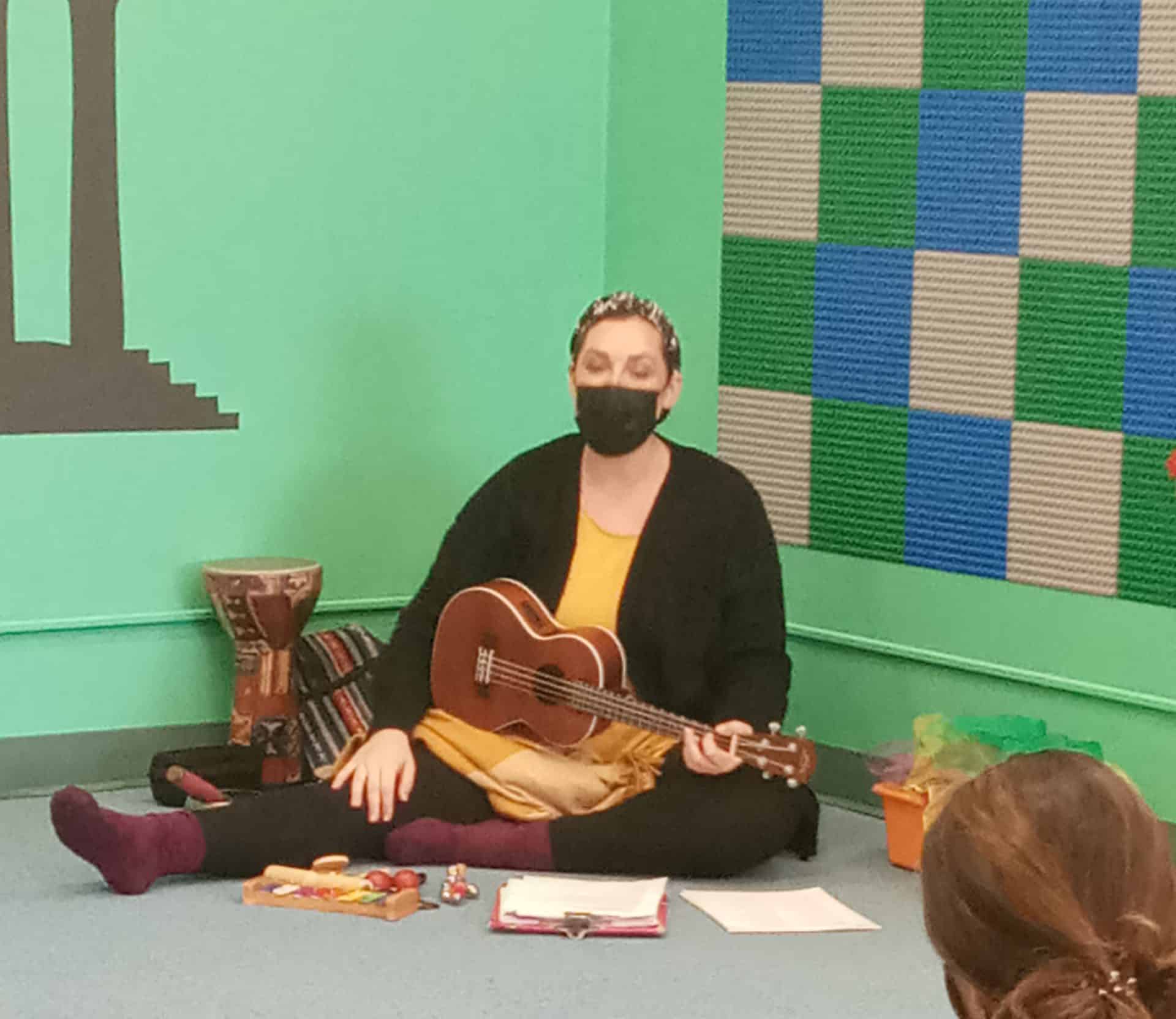
We think about this a lot, because our classes are built around it. Our travel-themed arts and crafts classes are designed to promote motor and speech development, and our Sensory Science class for toddlers is led by an experienced science teacher, with a parent or caregiver taking part alongside. Livingston parents tend to pay close attention to developmental milestones, and we’d rather show you the skills behind the craft than leave them unnamed.
Snow Globe Craft Questions Livingston Parents Ask Us
**What age can kids make a snow globe?** Toddlers can take part from around age one or two, as long as an adult handles the glue, the glitter and the sealing. Preschoolers can take on more of the pouring and stirring. Either way, the jar stays plastic and the lid gets sealed.
**Why is my snow globe leaking?** Usually the lid is the culprit. A decorative lid with no gasket can leak on the first shake, and a lid that’s only screwed on, not glued, can work loose. Dry the threads, add a thin line of waterproof glue and let it cure fully before shaking.
**Why did my glitter clump at the bottom?** You probably used too much glycerin. Dilute it back toward about two parts water to one part glycerin, or start over with a fresh batch.
**What can we do on a snow day in Livingston if we don’t want to make it at home?** Come see us at Exceptional Explorers. Open play is great for little ones, adults get in at no charge, and there’s a parent lounge where you can sit down for a minute. Weekend open play is popular, so book ahead.
**Can the kids make snow globes at a birthday party?** Yes. Snow Globe is one of our party craft add-ons at $15 per participant, alongside options like Coral Reef, Scribble Bot, Slime and Carnival Masks. You can add it to a party package such as our Exceptional Excursion or Grand Tour, and add-ons are subject to availability. Private parties run Saturday and Sunday, with only one party in the space at a time. Families from Montclair and Cedar Grove are about 13 minutes away.
Ready for a Snow Globe Craft This Winter in Livingston, NJ?
A good snow globe craft for toddlers comes down to a few things: a plastic jar, a lid that’s glued and sealed, and a clear split between your jobs and your child’s. Keep the glitter in adult hands, use the right amount of glycerin, and let everything dry before you add the water. Do that, and your two-year-old gets to make something real instead of watching you do it.
If you’d rather skip the supply run and the cleanup, we’re happy to host the mess. Reach out to Exceptional Explorers to ask about classes, open play, or adding the snow globe craft to your child’s birthday party.